
When it comes to the news, many people today don’t turn to traditional news outlets. Instead, the trend is to stay apprised of current events from other sources. If you seek “real,” unbiased, diverse, or specific industry or subject matter news, you can find it by watching YouTube videos, listening to podcasts, or reading newsletters produced by independent journalists. If you’d like to become a trusted journalist, consider using your writing ability to turn your blog into the next independent news outlet.
Since 2020, many journalists have migrated from traditional media to reader-funded publishing on Substack.com. This online publishing platform combines email newsletters, blogging, and social media features so independent writers, podcasters, and creators can share content and make money from subscriptions. Many bloggers shut down their blogs and moved to Substack as well.
However, there’s an interesting fact bloggers should note about this historical trend: independent news organizations are still far more likely to publish on their own websites than exclusively on Substack. Their websites remain their primary online hubs, while their newsletters, including those on Substack, are used to build relationships with readers and encourage subscriptions.
Bloggers are Journalists
 You may not see yourself as a journalist or consider your blog a news outlet. However, if you are an “authority blogger,” a writer focused on one topic and writing about it as a subject expert, you are a journalist. In fact, blog posts are often referred to as “articles.”
I have three active blogs, and each allows me to use my journalistic background to report on a specific topic. (I have a degree in magazine journalism.) Therefore, they are news outlets in their own right.
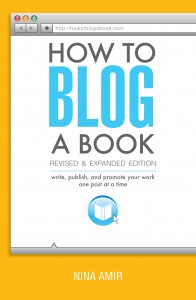
- On com, I write about blogging, blogging books, and changing your identity from blogger to author. I’ve been blogging since 2007; I’m an Author Coach, and I wrote the book How to Blog a Book, so blogging-related topics fall within my area of expertise and experience, and each “article” allows me to report on these subjects. Today’s post is a great example of my independent reporting on the topic. (I also write about what stops bloggers from blogging successfully, using my expertise as a Certified High Performance Coach and Transformational Coach.)
- On com, I write about nonfiction writing and publishing as well as how to overcome the challenges of becoming an author. I am an Author Coach, have traditionally and independently published my books, and have had many Amazon bestselling titles. I am also a Certified High Performance Coach and Transformational Coach. Thus, all these topics fall within my area of expertise and experience as well, and in each “article” I report on a subject related to these topics.
- On com, I write about personal and spiritual growth. The “As the Spirit Moves Me” blog offers a place to report on related topics using my expertise and experience as a Certified High Performance Coach and Transformational Coach. Plus, it draws on my 45+ years of personal development, self-help, metaphysical, esoteric, mystical, and spiritual study.
You likely blog about a topic that lies within your area of expertise or experience. That makes you an authority. Therefore, your blog is an independent news outlet for your subject area. If you “report” on your industry or community, that is true as well.
Keep that in mind as you consider turning your blog into the next independent news outlet. You can report on local, industry, community, national, or global news, or the news that interests you or about which you know the most.
Substack or Website?
If you’re wondering if you should start your own independent news outlet on Substack or your own website—your blog—remains the best choice. Sure, you might have more immediate reach and discoverability on Substack, with its 35 million monthly active subscribers and more than 5 million paid subscriptions. However, your blog can…and should…serve as your primary hub.
Former reporters from The New York Times, The Washington Post, CNN, BuzzFeed News, The Wall Street Journal, and many regional newspapers have launched independent publications on Substack. At the same time, some larger independent newsrooms have adopted Substack as their primary publishing platform or as a major distribution channel; yet, they maintain their website as their primary content channel.
More Journalists Publish on Websites
Currently, approximately 600 to 1,300 independent print and digital news outlets maintain a Substack publication. If you include solo investigative reporters and journalist-run newsletters that regularly break news, the number is likely several thousand.
The number of independent news outlets operating from their own websites is between 3,000 and 6,000 in the United States alone. Globally, the number is much higher, although a comprehensive worldwide registry doesn’t exist. Yet, there are a few sound statistics generated by reportable organizations.
For example, Project Oasis cataloged more than 1,600 independent local news organizations, and nearly all operate their own websites. These include nonprofit, for-profit, and community-owned digital news outlets. Project Oasis is an international research initiative and public directory designed to map, analyze, and support independent, digital-native news organizations.
Also, Local Independent Online News Publishers (LION Publishers) has 450+ member organizations in the U.S. and Canada, almost all of which publish primarily on their own websites rather than relying on Substack. LION Publishers offers services that help independent news publishers build more sustainable businesses.
And the Institute for Nonprofit News (INN) has 500+ nonprofit news organizations in its network, most with their own websites. Some also syndicate content via newsletters or Substack. INN’s goal is to strengthen and support independent news organizations in a new kind of news network: nonprofit, nonpartisan, and dedicated to public service.
Why Create a News Outlet on a Website (Instead of Substack)?
While it may seem easier to start your news outlet on Substack, the vast majority of established independent news organizations still prefer their own websites. They opt for their websites for the same reasons I have always said you should self-host your blog. This allows them to:
- own their platform, audience, and data
- control advertising and memberships
- have better search engine visibility
- build archives and multimedia content
- remain independent of a third-party platform
 By publishing on your blog or website first, you ensure that Google sends those who find your content in a search to your website, not to Substack. When it comes to blogging best practices, that has always been the goal—increase your search engine visibility and send readers to your website. Additionally, my recommendation, like that of most other experts, professional bloggers, and online promotion experts, remains to own your online home in cyberspace. You rent space on Substack, just like on Facebook, Medium, or Instagram; thus, you don’t make the rules or control how long that distribution channel remains active or viable.
Using Substack as a Distribution Channel
Many use Substack simply as a distribution channel, publishing newsletters there but still maintaining their primary website. Examples include outlets such as The Free Press, The Bulwark, and many local investigative publications. And republishing content—preferably repurposed to some extent—on Substack can be a great way to increase readership and subscriptions while still sending people to your website.
To accomplish that goal, however, publish on your site first, so Google knows where the content originally appeared. And give your Substack readers a reason to go to your website. For instance, they might find additional content there on specific topics. Or you might have videos or podcasts housed on your site, which they can only access by clicking through to that content.
Keep in mind that Google does index public Substack posts—and some rank well, such as publication homepages, author profile pages, and archived newsletter posts (if public). It does not index content behind a paywall or that requires an email subscription before the full content is visible.
Not All Readers Like Substack
If you are considering moving your newsletter, blog content, or news outlet to Substack, consider the fact that not all readers like Substack. Indeed, many people love Substack, but there is also a meaningful group of readers who either avoid it entirely or are reluctant to click Substack links. The reasons vary, and they’re worth understanding if you’re deciding whether to build an audience for your news outlet there.
1. They object to Substack’s content moderation policies.
Since 2021, some readers (and writers) have viewed Substack as too permissive toward extremist content. Some journalists and authors left the platform and encouraged readers to do the same because they didn’t want to support the company financially or by association. Although Substack later removed a few accounts that violated its policies, the controversy still shapes some people’s perceptions and willingness to use the platform.
2. They don’t want another platform or app.
Many readers already have technology overload. They don’t want to download another app or access another platform to obtain the information they desire. These readers may happily read your content if it’s on your own website but ignore it if it’s only on Substack.
3. They dislike the “Notes” feature.
Substack began primarily as a newsletter platform but has added social-media features, like “Notes.” Many users complain that Notes are filled with self-promotion, engagement tactics, and short-form content rather than thoughtful newsletter-like writing. Readers have expressed frustration over difficulty finding quality long-form articles.
4. They associate Substack with opinion rather than journalism.
Some readers perceive Substack as filled with opinion pieces, hot takes, and haphazard unedited reporting. Many excellent journalists publish there, but the perception exists and keeps some people away.
5. They dislike email newsletters.
Some people don’t enjoy consuming content through email. They’d rather visit a blog or read on news sites. For them, newsletters seem intrusive or contribute to inbox fatigue.
6. They worry about quality control.
Because anyone can publish on Substack, readers know there is no editorial gatekeeper. Therefore, some assume they must sort through a lot of mediocre content before finding valuable pieces. Recently, readers have voiced concerns about increasing amounts of AI-generated or AI-assisted writing, which has reduced the overall quality of what is found on the site.
7. They don’t like paid subscription prompts.
Even though most Substack publications offer a free option, many readers associate Substack with recurring requests to upgrade to paid subscriptions. Some find this tiresome and avoid clicking Substack links because they expect to encounter paywalls or frequent upgrade messages.
What this means for a blogger considering a move to Substack is this: You shouldn’t assume Substack is the easy or best way to go as you create an audience for your independent news outlet. You may…or may not…find your readers there. In some cases, you may accidentally turn your readers off if they believe you are “guilty by association.”
A Low-Risk Publishing Strategy
For someone building an audience—especially around a blog, books, ideas, a movement, or the news—it’s generally risky to rely exclusively on rented real estate like Substack, or any other free publishing platform for that matter. Instead, use what I call the “station and satellite” approach to building your news outlet.
- Use your website/blog as the permanent home for your content, the place where you publish and where search engines (and your audience) can easily find it. This is your “station”—the place from which you broadcast your news.
- Share your content from your main station to your “satellites.” Social platforms (including Substack, Instagram, LinkedIn, Medium, etc.) become rented (free) news distribution channels that point people back to your owned assets—your self-hosted website, blog, and email list. (Ask visitors to subscribe on your own site—with or without pay—so readers are added directly to your email list.)
This approach helps you reach readers who enjoy Substack while avoiding losing those who don’t. Additionally, you use the power of social media platforms to direct readers to your blog, website, and email subscription list. This reduces your dependence on any single platform, so you are less impacted if its popularity, quality, focus, features, or policies change over time—or if it goes under for some reason.
Treat Substack as an additional distribution channel; share content there to reach new readers. Then, direct readers to your website and blog, which serve as your independent news outlet.
Making Money with an Independent News Outlet
A good number of bloggers would like to make money from their websites. Income has traditionally come from selling products, like books and courses, or services, like coaching and consulting, but this can prove a tough road to travel. Ads can provide a source of revenue, but only if your site has a huge amount of traffic.
Some bloggers have succeeded in their efforts to gain subscribers. Even then, getting those readers to pay for content can be difficult.
That’s why so many bloggers have moved to Substack or similar sites, like beehiiv, Ghost, and Medium. These sites are set up to help writers post content, obtain email addresses from subscribers, and charge for such subscriptions.
The growth of Substack represents a shift from institution-funded journalism to reader-funded journalism. In the past, most independent news outlets primarily relied on advertising; now many depend on paid subscribers. This has enabled many niche, investigative, and local print news organizations to survive despite the decline of traditional newspaper advertising.
Bloggers can provide content behind paywalls as well; PayPal and Stripe make it easy to collect money. You don’t have to create a paid independent news outlet on a different site to gain paid subscribers.
Become a G0-To News Source in Your Subject Area
Whether you utilize the power of Substack or continue publishing content on your blog and driving traffic to your website, know that you can become a go-to news source for your readers. Use your experience, knowledge, and research abilities to become an independent news source on your subject area or for your industry, community, or the world.
Do you see your blog as an independent news outlet, or would you like to turn it into one?If so, please leave it in a comment so we can all learn together. Also, please share this post with a blogger or writer who would benefit from reading it. And if you are looking for an Author Coach to provide you with more time-tested advice, click here. Or join the Nonfiction Writers’ University for group Author Coaching and training.
 Would you like to write, blog, book, and publish nonfiction books? Is it your dream to transform yourself from blogger to successful author?
Get the comprehensive education and coaching you need to succeed as a blogger and nonfiction author. Find out more and join here.
Image courtesy of teteescape.

Leave a Reply