A lot of people ask me whether they should include everything in their blogged book. They are afraid to “give it all away.” In fact, no need exists to include all your content if you don’t want to do so. Actually, agents and acquisitions editors like it if you hold back a bit of content […]
Archives for February 2010
Why Blog a Book? You and Your Blog Might Get Discovered! (Part 9)

If you think only one or two bloggers’ blogs or blogged books have been found, think again. The numbers are increasing every day. Ever since roughly 2005, publishers have been scanning the Internet to find new writers with great ideas that can be turned into books. Some of those writers actually are bloggers. Some […]
Why Blog a Book? To Make Sure You Complete Your Manuscript (Part 8)
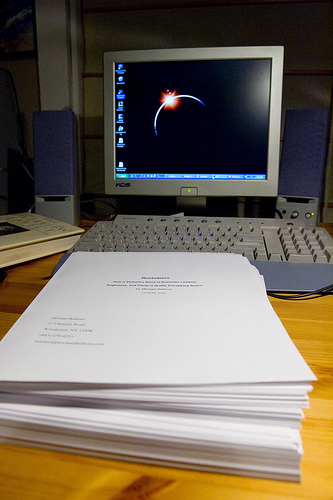
Many writers start book projects and don’t finish them. This becomes increasingly true for nonfiction writers who want to become traditionally published. Unlike fiction writers who must submit a completed novel along with a brief proposal to an agent or acquisition editor, nonfiction writers must submit only about 25 pages of competed manuscript as part […]
How to Blog a Book Teleseminar Begins Tomorrow

We pause now for a brief commercial announcement: The following teleseminar offered by Nina Amir and CopyWright Communications begins tomorrow at 2 p.m. PST and runs for one hour on six weeks consecutive Tuesdays. How to Blog a Book A Step-by-Step Teleseminar about Writing and Publishing Manuscripts on the Internet One Post at a Time […]
Why Blog a Book? To Get Feedback on Your Writing (Part 7)
The fact that readers have the ability to comment on your book offers you, the blogger, one of the greatest reasons to blog a book. Many writers join critique groups so they can have other writers read or listen to them read their work and offer feedback. However, when you, the blogger, receive comments from […]
Why Blog a Book? For the Daily Writing Commitment (Part 6)

Writers write. That’s what we’re told. However, many times, writers don’t write. If you blog a book, you must write regularly. Hopefully, the blog becomes a form of daily writing practice and commitment. Once you begin blogging, to gain readers you most post regularly. The more often you post, the more quickly you’ll gain readers. […]
Why Blog a Book? To Test Market Your Idea (Part 5)

Every good business person knows the value of test marketing a product before investing a ton of money into mass production and distribution. Value exists in test marketing a book as well, and a blogged book represents an extremely effective and cheap way to test market a book idea. My literary agent once told me […]
Why Blog a Book? Your Writing Gets Read (Part 4)
Why do writers write? Some might answer, “Because they must.” I believe writers write because they want someone to read what they’ve written. They write because they want to touch someone with their words. They write because they want to reach out through their work and make others cry or laugh, learn something or […]
Why Blog a Book? It Can Give You Expert Status (Part 3)

Expert status constitutes one spoke in an author’s platform. Publishers purchase nonfiction books from authors they perceive as experts in their fields. According to Techorati.com 56 percent of all bloggers say their blog has helped them or their companies establish a position as a thought leader within an industry. Additionally, 58 percent say they are […]
Why Blog a Book? You Get Exposure and Build “Platform” (Part 2)
You Get Exposure and Build “Platform” Many writers enjoy spending time alone in their “lonely garret” with only the company of a hot cup of coffee or tea and a computer (or a pad of paper and pencil). In fact, that’s what most writer’s like best. To become a published nonfiction author, however, you […]